 BabyCalm
Here are the three ways of counting, the tests that are usually done by then and the changes many people notice as the second trimester begins.
Key points
- The first trimester ends when you complete week 13 and start week 14.
- The mix-up with weeks 12 and 14 comes from different ways of counting, not from different medical answers.
- The 12-week scan and the combined screening test are usually done before the end of week 13.
- For many people, nausea eases and energy returns around the move into the second trimester.
- Gas in these weeks is linked to progesterone, which slows digestion down.
In which exact week does the first trimester end?
The short answer: at the end of week 13
The first trimester ends when week 13 is complete and week 14 begins. If you are in week 13, you are still in the first trimester; from week 14, you are in the second.
Why do some sources say week 12 or 14? Because trimesters are not exact medical cut-offs. They are a handy way of splitting around 40 weeks into three. Some sources round down to 12 and others up to 14, which is where the confusion in forums and apps comes from.
How long is the first trimester?
It lasts 13 complete weeks. The three numbers you will come across describe the same moment from different sides.
| Number | Where it comes from | What it means |
|---|---|---|
| Week 12 | It matches the 12-week scan | A practical marker in the test schedule, not the end of the trimester |
| Week 13 | 13 complete weeks | The actual end: once it is complete, week 14 begins |
| Week 14 | First week of the second trimester | Some sources count the change from here |
Week 12 comes from the test schedule: the 12-week scan closes the first-trimester tests, so many people assume the trimester ends there too. Week 14 appears because if you divide around 40 weeks by three, the second trimester starts in week 14.
Which tests are usually done before it ends?
In many countries, two tests are offered before the end of week 13: the 12-week scan and the blood test that is part of combined screening. Both have a set time window, so it helps to book with some margin. The exact schedule depends on where you live and who looks after your pregnancy.
The 12-week scan and combined screening
The 12-week scan is done between week 11 and week 13 plus 6 days. It dates the pregnancy accurately and measures the nuchal translucency. Combined screening adds a blood test to that measurement, and together they give a probability for some chromosomal conditions. It is not a diagnosis: if the result calls for it, your care team will explain the options.
By week 13 you will usually have had your first blood tests and the scan, plus combined screening where it is offered. If an appointment has slipped, talk to your midwife or doctor. They can usually rearrange it within the time window.
Is sex fine in the first trimester?
In a pregnancy without complications, yes. The uterus, the amniotic fluid and the cervix protect the baby. It is common for desire to change: tiredness and nausea lower it for many couples, and for others it goes up. Both are normal.
If you notice bleeding, including light spotting after sex, contact your midwife or maternity unit promptly, even if you have no pain. There can be different causes, and your care team can assess what is happening. The NHS explains what to do about bleeding during pregnancy.
What kind of yoga fits the first trimester?
Gentle yoga fits well: steady standing poses, cat-cow on all fours and calm breathing. If you already practised, you can keep your routine at a lower intensity; if you are starting now, a prenatal yoga class is a good place to begin.
It is best to leave deep twists, lying on your front and sudden transitions for later. If you feel dizzy or notice bleeding, stop and mention it to your midwife or doctor. The NHS explains how to adapt exercise in its guide to exercise in pregnancy.
Why is there more gas in the first trimester?
Because of progesterone. This hormone rises from the first weeks and also relaxes the muscles of the digestive system. Digestion slows down, which is where the bloating and gas come from, even before a bump shows.
Small, frequent meals, eating slowly, skipping fizzy drinks and a gentle walk after eating usually help. If constipation is bothering you, more water and fibre are often enough. Check any medication with your midwife or doctor first.
What changes as the second trimester begins?
Between week 13 and week 14 the body changes pace. For many people nausea eases and some energy comes back, along with the urge to get out, move and pick routines back up. ACOG summarises its activity recommendations on its page about exercise during pregnancy.
Some occasional nausea can continue for a few more weeks. The bump starts to round out, first in fitted clothes and then visibly. The baby's first movements are usually felt later. The NHS puts them between weeks 16 and 24, and if this is your first baby, you might not feel them until after week 20.
How can you follow your pregnancy week by week without stress?
You do not need to write everything down. It is enough to know which week you are in, which appointments are coming up and what you want to ask at the next one. If you skip a day, that is fine.
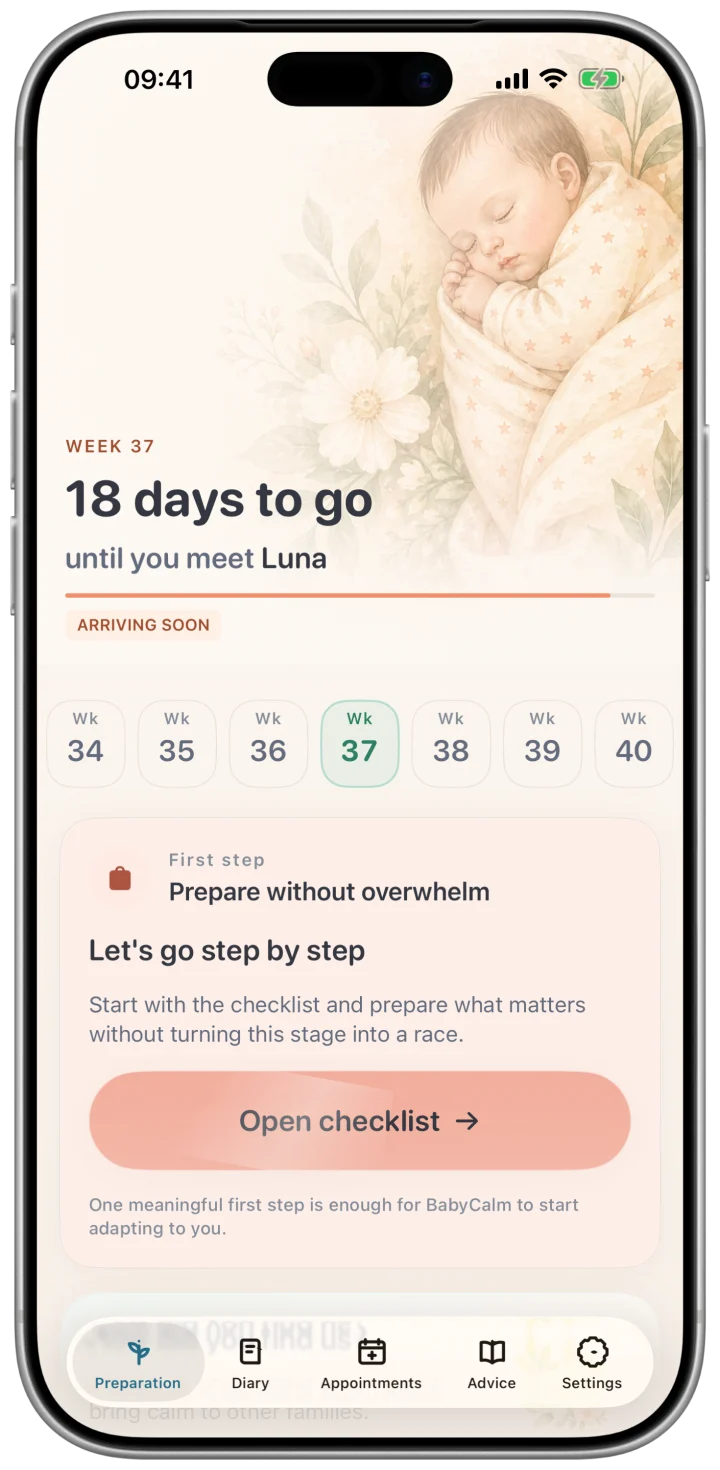
In BabyCalm, pregnancy mode shows your week, what to prepare, a diary and your appointments. When the baby arrives, the same app logs sleep, feeds and diapers in one tap. If you want to know what happens to your data before you try it, our privacy policy explains it.
Frequently asked questions
Is week 13 already the second trimester?
No, it is still the first trimester. The change comes when you finish it and start week 14.
Why does my app say week 12 and my midwife week 13?
Because each one counts differently. Week 12 marks the end of the first-trimester tests, such as the scan. Week 13 is the actual length: once it is complete, week 14 begins.
Can I still have the 12-week scan if I am already in week 13?
Yes, the window runs until 13 weeks and 6 days. If you are close to the limit, ask your midwife or doctor for an appointment as soon as you can so they can fit it in.
Does first-trimester gas go away in the second trimester?
It usually improves. Progesterone stays high throughout pregnancy, but many people feel better once nausea eases and eating habits change.
When does nausea usually stop?
For many people it eases around the move from week 13 to week 14. Some occasional nausea can continue for a few more weeks. If you are being sick every day beyond that point, mention it to your midwife or doctor.